Showing posts with label Climate. Show all posts

Tuesday, 16 January 2018

PHIVOLCS: Mayon’s ‘moderately-sized’ activity, nothing like 1814’s eruption

The Philippine Institute of Volcanology and Seismology is not seeing any indicators that the restive Mayon Volcano will soon erupt as destructively as it did in 1814, when it killed over 1,200 people in a violent one-day period.
Instead, scientists at the PHIVOLCS are considering a more “moderate” scenario, said PHIVOLCS Director Renato Solidum, Jr.
“We are looking at moderate[ly]-sized activities as scenarios, not the worst case like 1814,” he told GMA News Online in a text message.
“We will closely monitor if there will be changes in the parameters manifested by the volcano,” he also said.
Since records started in 1616, the Mayon Volcano has erupted more than 50 times, making it one of the 24 active Philippine volcanoes.
Its most destructive explosion recorded so far occurred on the first day of February, 1814, when a Plinian eruption marked with pyroclastic flows, “volcanic lightning,” and lahar damaged the areas of Camalig, Cagsaua, Budiao, Guinobatan, and half of Albay.
PHIVOLCS records show the 1814 eruption killed 1,200 people. The next deadliest Mayon eruption was a 17-hour violent phase in 1897, which killed 350 people “most likely due to pyroclastic flows.”
As of Tuesday morning, Alert Level 3 remains up over the volcano as state volcanologists continue to warn of a possible hazardous eruption “within weeks or days.”
In the last 24 hours, the volcano’s seismic network has recorded 75 lava collapse events and a formation of a new lava dome at the volcano’s crater, as well as nine tremors, four of which were accompanied by "lava fountaining."
Albay’s Monday night was lit with Mayon’s fiery red-orange crater glow due to lava flow that continued until Tuesday.
At least 5,000 families have been evacuated to safety due to the volcano’s recent unrest, but some still return to the six-kilometer permanent danger zone to check on crops and livestock.
The Albay government has placed the province under a state of calamity for access to calamity funds. — MDM, GMA News

Monday, 15 January 2018

Peru earthquake: Two dead, 65 injured after 7.3-magnitude rocks South American nation, tsunami threat ruled out

Lima: A 7.3 magnitude earthquake shook southern Peru on Sunday, killing at least two people and injuring 65 others, the South American country's civil defence agency said.
Local authorities said homes made of adobe collapsed in coastal areas most directly affected by the quake, which struck in the Pacific, 31 kilometers (19 miles) from the seaside town of Acari in the region of Arequipa, according to the US Geological Survey.
"There are two fatalities in the region of Arequipa and so far 65 injured have been reported," General Jorge Chavez, head of the National Civil Defence Institute, said.
Chavez said military planes were delivering humanitarian aid including tents to affected areas.
The powerful earthquake struck off Peru's coast early Sunday, tumbling adobe homes in small, rural towns. AP
One person died in the Yauca district and another in the Bella Union district, both in the Arequipa region, where rescue workers were trying to help those affected, Peru's Civil Defence said.
Peruvian president Pedro Pablo Kuczynski travelled to the region and flew over the quake zone. Speaking to reporters, he attributed the two deaths to adobe houses collapsing.
The Peruvian navy and the Pacific Tsunami Warning Center in Hawaii ruled out the threat of a tsunami.
Adobe houses were levelled in the coastal town of Lomas and elsewhere in the surrounding area, Santiago Neyra, the mayor of the nearby town of Caraveli said.
Electricity was out in several municipalities and many roads were closed to traffic or passable in only one direction, the mayor said.
Structural damage was reported to a bridge in Arequipa, said the head of the region's highway police, Major Alberto Rojas.
In the city of Arequipa, residents ran into the streets after the quake struck at 4.18 am (local time). It was felt as far away as Lima.
"Here at the clinic the tremor felt super long," a patient in a Lima private hospital told AFP.
The earthquake rocked Peru just before Pope Francis is slated to arrive on Thursday for a three-day visit after touring Chile.
Peru lies on the so-called "Ring of Fire" - an arc of fault lines that circles the Pacific Basin and is prone to frequent earthquakes and volcanic eruptions.
The South American country records about 200 earthquakes a year, most of them going unnoticed by the public.
The last major earthquake to shake Peru hit in August 2007, killing 595 people.
A 6.3 magnitude quake was felt in southern Peru on the border with Chile last October, leaving four people with slight injuries.

Tuesday, 2 January 2018

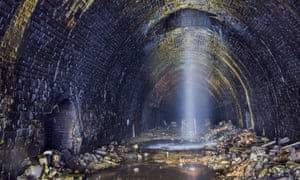
New push to make England's longest cycle tunnel a reality

Queensbury Tunnel

A campaign has accelerated to turn a disused railway line in Yorkshire into England’s longest cycle tunnel – instead of using £3m of public money to close it for ever.
The 1.4 mile (2.3km) Queensbury line, which runs 377ft (115 metres) below a hill between Halifax and Keighley in West Yorkshire, was closed in 1956 as rail travel declined and private car ownership increased.
The Department for Transport (DfT) wants to shut it permanently this year, filling in critical sections with concrete in a project campaigners say will cost about £3m – the same amount they claim it would cost to patch the tunnel and turn it into a subterranean cycling route.
The campaigners want the tunnel to be the centrepiece of a new cycle network connecting Halifax with Bradford, decreasing obesity, reducing pollution and easing traffic flows. Currently hardly anyone cycles in the area, put off by intimidating roads and brutal hills. The village of Queensbury, which gives the tunnel its name, is one of the highest parishes in England, sitting at 330 metres (1,100ft) above sea level.
Sustrans, the environmental charity, has produced a report suggesting the Queensbury cycle route could deliver £37.6m worth of economic, health and tourism benefits over 30 years.
A similar project in Bath proved popular when it opened in 2013. The mile-long Combe Down tunnel features an interactive light and sound installation and is now a tourist attraction in its own right.
The Monsal trail on the old Midland Railway line in the Derbyshire Peak District is now one of the national park’s most popular attractions. In 2016 more than 120,000 cycle movements were recorded by an automatic counter on the route, which opened in 2011 and runs for 8.5 miles between Blackwell Mill and Bakewell.
A virtual image of the Queensbury tunnel as a cycle route.
Pinterest
 A virtual image of the Queensbury tunnel as a cycle route. Photograph: Four by Three
As things stand, Highways England’s Historical Railways Estate (HRE) – which acts as custodian of the disused railway tunnel on behalf of the DfT – could begin work to seal off the tunnel this June, according to Graeme Bickerdike, who coordinates the Queensbury Tunnel Society’s engineering activities.
A report commissioned by HRE in 2016 said it would cost £35m to upgrade the tunnel and five ventilation shafts to turn it into a bike route, leading the DfT to accelerate plans to shut it for good, Bickerdike said.
This would involve filling critical parts of it with concrete, making it all but impossible for the tunnel to ever be reopened, said Bickerdike, who writes about tunnels for a railway magazine.
However last year the Queensbury Tunnel Society commissioned specialist engineers who put together a plan to spend just £4.3m repairing the tunnel and laying an asphalt cycle path.
The society wants Bradford council to take ownership of the tunnel, with the £3m abandonment budget transferred as a dowry to cover future maintenance work.
A number of Bradford councillors support the plans but the council has yet to agree to take responsibility for the tunnel.
Bickerdike said constructing safe, pleasant, off-road cycle routes was the best way of getting people to cycle: “If we genuinely want to people to get out of their cars and on to bikes … the only thing that will encourage a lot of people to do that is to ensure there is infrastructure that means you are separated from lorries and buses and cars.”

Tuesday, 29 August 2017

Hurricane Harvey floodwaters will likely rise as death toll reaches 7, Donald Trump to visit Texas today

Houston: Floodwaters from Tropical Storm Harvey, which has already killed at least seven people in Texas and was expected to drive tens of thousands from their homes, will likely rise in the coming days, officials warned on Monday as heavy rains continued to pound the US Gulf Coast.
National Guard troops, police officers, rescue workers and civilians raced in helicopters, boats and special high-water trucks to rescue the hundreds of people still stranded in and around Houston, the nation’s fourth-largest city. The storm was the most powerful hurricane to strike Texas in more than 50 years when it came ashore on Friday near Corpus Christi, 220 miles (354 kms) south of Houston and the worst was far from over as the National Weather Service issued numerous flood warnings across the region.
President Donald Trump plans to go to Texas on Tuesday to survey the damage and may in the future visit Louisiana where the storm is now dumping rain. Trump, facing the biggest US natural disaster since he took office in January, has signed disaster proclamations for Texas and Louisiana, triggering federal relief efforts.
Harvey has killed at least six people in Harris County, where Houston is located, said Tricia Bentley, a spokeswoman for the county coroner’s office, including a man who died in a house fire on Friday night and an elderly woman driving through flooded streets on the city’s west side the next day. A 60-year-old woman died in neighbouring Montgomery County when a tree fell on her trailer home while she slept, the local medical examiner said on Twitter.
A truck tips over as Harvey hit the Texas coastline on Friday. AP
Both of Houston’s major airports were shut down, along with most major highways, rail lines and a hospital, where patients were evacuated over the weekend. As of Monday evening 267,000 Texans were left without power in the southeast corner of the state. The Harris County Office of Homeland Security and Emergency Management issued a “shelter in place” warning to residents of La Porte and Shoreacres, about 25 miles (40 kms) east of Houston, after a chemical leak was caused by a ruptured pipeline.
As stunned families surveyed the wreckage of destroyed homes and roads flooded or clogged with debris, Texas Governor Greg Abbott warned Houstonians to brace for a long recovery. “We need to recognise this is going to be a new and different normal for this entire region,” Abbott said.
Harvey was expected to linger over Texas’ Gulf Coast for the next few days, dropping another 10 to 20 inches (25 to 51 cms) of rain, with threats of flooding extending into Louisiana.
In scenes evoking the aftermath of Hurricane Katrina in 2005, police and Coast Guard teams have rescued at least 2,000 people so far, plucking many from rooftops by helicopter, as they urged the hundreds more believed to be marooned in flooded houses to hang towels or sheets outside to alert rescuers.
Harvey’s centre was about 100 miles (160 kms) south of Houston and forecast to arc slowly towards the city through Wednesday, with the worst floods expected later that day and on Thursday. Schools and office buildings were closed throughout the metropolitan area, home to 6.8 million people, as chest-high water filled some neighbourhoods in the low-lying city.
The US Army Corps of Engineers said Monday that it was releasing water from the nearby Addicks and Barker reservoirs into Buffalo Bayou, the primary body of water running through Houston. “The more they release it could go up and it could create even additional problems,” Houston Mayor Sylvester Turner warned. But the release was said to be necessary to prevent an uncontrolled surge of water, which Turner said “would be exponentially worse.”
Torrential rain also hit areas more than 150 miles (240 kms) away, swelling rivers and causing a surge that was heading towards the Houston area, where numerous rivers and streams already have been breached. About 5,500 people were in shelters as of Monday morning, city officials said, with Federal Emergency Management Agency director Brock Long forecasting that 30,000 would eventually be housed temporarily in shelters.
Regina Costilla, 48, said she and her 16-year-old son had been rescued from their home by a good Samaritan with a boat. She worried until she was reunited with her husband and large dog, who had been left behind because they did not fit into the boat. “I’m not complaining; we’re alive,” said Costilla. “When I saw the forecast of the storm I said I’ll be happy if we get out with our lives.”
Houston did not order an evacuation due to concerns about people being stranded on city highways now consumed by floods, Turner said. Abbott, who had suggested on Friday that people leave the area, declined to second-guess the mayor on Monday, telling reporters, “Decisions about evacuations are something that are behind us.”
Gasoline futures RBc1 hit their highest in two years as Harvey shut down multiple refiners, knocking out about 13 percent of total US refining capacity, based on company reports and Reuters estimates.
Almost half of the US refining capacity is in the Gulf region. The nation's second-largest refinery was shutdown in Baytown, and the nation's largest refinery in Port Arthur was weighing shutting down with a final decision expected Tuesday, sources told Reuters.
The floods' path of destruction could destroy as much as $20 billion in insured property, making it one of the costliest storms in history for US insurers, according to Wall Street analysts.

Hurricane Harvey paralyses Houston for fourth consecutive day as flood waters continue to rise

Hurricane Harvey paralyses Houston for fourth consecutive day as flood waters continue to rise
Flood waters reached the roof lines of single-storey homes on Monday and people could be heard pleading for help from inside as Harvey poured rain on the Houston area for a fourth consecutive day after a chaotic weekend of rising water and rescues.
The nation's fourth-largest city was still mostly paralysed by one of the largest downpours in US history. And there was no relief in sight from the storm that spun into Texas as a Category 4 hurricane, then parked over the Gulf Coast. With nearly 2 more feet (61 centimetres) of rain expected on top of the 30-plus inches (76 centimetres) in some places, authorities worried that the worst might be yet to come.
Reuters reported Tricia Bentley, a spokeswoman for the county coroner’s office as saying that the flood waters from Harvey have killed at least seven people, including a man who died in a house fire on Friday night and an elderly woman driving through flooded streets on the city’s west side the next day. A 60-year-old woman died in neighbouring Montgomery County when a tree fell on her trailer home while she slept, the local medical examiner said on Twitter.
A Houston television station reported Monday that six family members were believed to have drowned when their van was swept away by flood waters. The KHOU report was attributed to three family members the station did not identify. No bodies have been recovered. Police chief Art Acevedo told AP that he had no information about the report but said that he's "really worried about how many bodies we're going to find."
According to the station, four children and their grandparents were feared dead after the van hit high water Sunday when crossing a bridge in the Greens Bayou area. The driver of the vehicle, the children's great-uncle, reportedly escaped before the van sank by grabbing a tree limb. He told the children to try to escape through the back door, but they were unable to get out.
The disaster unfolded on an epic scale in one of America's most sprawling metropolitan centers. The Houston metro area covers about 10,000 square miles (roughly 26,000 square kilometres), an area slightly bigger than New Jersey. It's criss-crossed by about 1,700 miles (2,736 kilometres) of channels, creeks and bayous that drain into the Gulf of Mexico, about 50 miles to the southeast from downtown.
The storm is generating rains that would normally be seen only once in more than 1,000 years, said Edmond Russo, a deputy district engineer for the Army Corps of Engineers, which was concerned that flood water would spill around a pair of 70-year-old reservoir dams that protect downtown Houston.

Hurricane Harvey continues to flood Texas. AP
The flooding was so widespread that the levels of city waterways have equalled or surpassed those of Tropical Storm Allison from 2001, and no major highway has been spared some overflow. The city's normally bustling business district was virtually deserted Monday, with emergency vehicles making up most of the traffic.
Rescuers continued plucking people from the flood waters. Mayor Sylvester Turner put the number rescued by police at more than 3,000. The Coast Guard said it had also rescued more than 3,000 by boat and air and was taking more than 1,000 calls her hour.
Chris Thorn was among the many volunteers still helping with the mass evacuation that began Sunday. He drove with a buddy from the Dallas area with their flat-bottom hunting boat to pull strangers out of the water. "I couldn't sit at home and watch it on TV and do nothing since I have a boat and all the tools to help," he said.
They got to Spring, Texas, where Cypress Creek had breached Interstate 45 and went to work, helping people out of a gated community near the creek. "It's never flooded here," Lane Cross said from the front of Thorn's boat, holding his brown dog, Max. "I don't even have flood insurance."
A mandatory evacuation was ordered for the low-lying Houston suburb of Dickinson, home to 20,000. Police cited the city's fragile infrastructure in the floods, limited working utilities and concern about the weather forecast.
In Houston, questions continued to swirl about why the mayor did not issue a similar evacuation order. Turner has repeatedly defended the decision and did so again Monday, insisting that a mass evacuation of millions of people by car was a greater risk than enduring the storm. "Both the county judge and I sat down together and decided that we were not in direct path of the storm, of the hurricane, and the safest thing to do was for people to stay put, make the necessary preparations. I have no doubt that the decision we made was the right decision."
He added, "Can you imagine if millions of people had left the city of Houston and then tried to come back in right now?"
The Red Cross quickly set up the George R Brown Convention Centre and other venues as shelters. The centre, which was also used to house Hurricane Katrina refugees from New Orleans in 2005, can accommodate roughly 5,000 people. By Monday evening, it was nearly full.
At the Addicks and Barker reservoirs, the Army Corps started releasing water Monday because water levels were climbing at a rate of more than 6 inches (15 centimetres) per hour, Corps spokesman Jay Townsend said. The move was supposed to help shield the business district from flood waters, but it also risked flooding thousands more homes in nearby subdivisions. Built after devastating floods in 1929 and 1935, the reservoirs were designed to hold water until it can be released downstream at a controlled rate.
In the Cypress Forest Estates neighbourhood in northern Harris County, people called for help from inside homes as water from a nearby creek rose to their eaves. A steady procession of rescue boats floated into the area.
Harvey increased slightly in strength Monday as it drifted back over the warm Gulf, according to the National Hurricane Centre. Forecasters expect the system to stay over water with 45 mph (72 kph) winds for 36 hours and then head back inland east of Houston sometime Wednesday. The system will then head north and lose its tropical strength.
Before then, up to 20 more inches (51 centimetres) of rain could fall, National Weather Service Director Louis Uccellini said Monday. That means the flooding will get worse in the days ahead and the flood waters will be slow to recede once Harvey finally moves on, the weather service said.
Sometime Tuesday or early Wednesday, parts of the Houston region will probably break the nearly 40-year-old US record for the biggest rainfall from a tropical system — 48 inches, set by Tropical Storm Amelia in 1978 in Texas, meteorologists said. The amount of water in Houston was so unprecedented that the weather service on Wednesday had to update the colour charts on its official rainfall maps to indicate the heavier totals.
In Louisiana, the images of the devastation in Houston stirred up painful memories for many Hurricane Katrina survivors. "It really evoked a lot of emotions and heartbreak for the people who are going through that now in Houston," Ray Gratia said as he picked up sandbags for his New Orleans home, which flooded during the 2005 hurricane.
In Washington, President Donald Trump's administration assured Congress that the $3 billion balance in the Federal Emergency Management Agency's disaster fund was enough to handle immediate needs, such as debris removal and temporary shelter for displaced residents. Trump planned to visit Texas on Tuesday.
Harvey was the fiercest hurricane to hit the US in 13 years and the strongest to strike Texas since 1961's Hurricane Carla, the most powerful Texas hurricane on record.

Monday, 28 August 2017

Hurricane Harvey: Flash floods in Houston bring back painful memories of Katrina

Hurricane Harvey: Flash floods in Houston bring back painful memories of Katrina
As people waded in chest-high floodwaters, Houston turned its main convention center into a shelter on Sunday, evoking memories of Hurricane Katrina, when breached levees in New Orleans stranded tens of thousands of people in squalid conditions at that city's football stadium and convention center.
A car is submerged on a freeway flooded by Tropical Storm Harvey on Sunday near downtown Houston. AP
Elected officials have vowed to heed the lessons from Katrina in 2005, when about 30,000 evacuees spent days packed inside the sweltering Superdome with limited power and water and a roof that was shredded in the howling wind.
The fiasco exposed the failure of both the city and federal government to prepare adequately for the storm.
Senator Chuck Grassley of Iowa told President Donald Trump on Twitter to "keep on top of hurricane Harvey" and not repeat the mistakes that President George W Bush made with Katrina. Bush was heavily criticised for a slow federal government response to the storm, which left more than 1,800 people dead and caused $151 billion dollars in damage.
"Got your message loud and clear. We have fantastic people on the ground, got there long before #Harvey. So far, so good!" Trump tweeted back.
Later, the White House announced Trump would go to Texas on Tuesday.
There is no doubt the challenge will be huge for Houston, a city of 2.3 million residents.
Forecasters predict the remnants of Hurricane Harvey could dump as much as 50 inches (127 centimeters) of rain in parts. "The breadth and intensity of this rainfall is beyond anything experienced before and is resulting in catastrophic flooding," the National Weather Service said in a statement.
In New Orleans, almost 80 percent of residents were evacuated days ahead of Katrina's arrival. In contrast, Houston Mayor Sylvester Turner advised people to stay in their homes, saying it was not feasible to completely evacuate the nation's fourth-largest city.
Houston authorities urged people to escape to the roofs of their homes to avoid becoming trapped in attics, which caused more than a dozen deaths in Katrina's aftermath.
A young man fights the current from the overflow of Buffalo Bayou as he makes his way through floodwaters. AP
Rescue workers were so overwhelmed with calls for help on Sunday that they initially were responding only to life-and-death situations.
The number of shelters was expected to increase dramatically.
Dallas also opened its convention center to shelter 5,000 people from the southern part of the state.
In Houston, the George R Brown Convention Center received hundreds of people as authorities scrambled to ready the building with 1.8 million square feet (0.17 million sq. meters) of space. Officials asked for help from restaurants to feed the growing population.
In 2005, Houston hosted Katrina survivors, with the convention center and the Astrodome receiving thousands of people fleeing the horrific conditions of New Orleans' shelters.
Among them was Raeann Barber, who came to Houston with nothing but the nightgown on her back.
The 37-year-old woman, who rebuilt her life in Houston, found herself again fleeing her home when she woke up to knee-high water in her apartment. A Coast Guard boat helped her escape.
"One way or another, guess what?" she said as she looked for a cot at the convention center. "To me, the Lord will make the way, one way or another."
The Texas city won applause for its efforts in helping Katrina survivors. But some people on Sunday were questioning city officials' decisions so far in this storm.
Emergency services are working around the clock to help residents of Houston and nearby areas. AP
Desiree Mallard, who escaped her apartment complex by using an inflated air mattress to float her nearly 2-year-old son through chest-high floodwaters, said she wished she had left before Hurricane Harvey approached the Texas Gulf Coast. But she saw on the news to stay in place.
"And then when it got bad, they said it's too late to evacuate," she said.
Asked if this storm could become Houston's Hurricane Katrina, Texas governor Greg Abbott, who had contradicted the mayor's advice and urged people to flee from Harvey's path, ducked the question.
"As far as the evacuations, now is not the time to second-guess the decisions that were made," Abbott told reporters in Austin. "What's important is that everybody work together to ensure that we are going to, first, save lives and, second, help people across the state rebuild. And because of the effort that we've been able to put together, I think and believe we will be very successful."

Friday, 25 August 2017

Hurricane Harvey forces evacuations in Texas, could be fiercest hurricane to hit US in 12 years

Houston: Harvey intensified into a hurricane on Thursday and steered for the Texas coast with the potential for up to 3 feet of rain, 125 mph winds and 12-foot storm surges in what could be the fiercest hurricane to hit the United States in almost a dozen years.
Forecasters labelled Harvey a "life-threatening storm" that posed a "grave risk." Millions of people braced for a prolonged battering that could swamp dozens of counties more than 100 miles inland.
Landfall was predicted for late Friday or early Saturday between Port O'Connor and Matagorda Bay, a 30-mile (48-kms) stretch of coastline about 70 miles (110 kms) northeast of Corpus Christi
Harvey grew quickly Thursday from a tropical depression into a Category 1 hurricane. Fuelled by warm Gulf of Mexico waters, it was projected to become a major Category 3 hurricane. The last storm of that category to hit the US was Hurricane Wilma in October 2005 in Florida.
Superstorm Sandy, which pummelled New York and New Jersey in 2012, never had the high winds and had lost tropical status by the time it struck. But it was devastating without formally being called a major hurricane.
People being evacuated before Hurricane Harvey makes landfall. AP
"We're forecasting continuing intensification right up until landfall," National Hurricane Center spokesman Dennis Feltgen said.
All seven Texas counties on the coast from Corpus Christi to the western end of Galveston Island have ordered mandatory evacuations of tens of thousands of residents from all low-lying areas. In four of those counties, officials ordered their entire county evacuated and warned those who stayed behind that no one could be guaranteed rescue. Voluntary evacuations have been urged for Corpus Christi itself and for the Bolivar Peninsula, a sand spit near Galveston where many homes were washed away by the storm surge of Hurricane Ike in 2008.
Texas officials expressed concern that not as many people are evacuating compared with previous storms.
"A lot of people are taking this storm for granted thinking it may not pose much of a danger to them," Governor Greg Abbott told Houston television station KPRC. "Please heed warnings and evacuate as soon as possible."
Abbott has activated about 700 members of the state National Guard ahead of Hurricane Harvey making landfall.
As of late Thursday afternoon, Harvey was about 305 miles (490 kms) southeast of Corpus Christi, moving to the north-northwest at about 10 mph (17 kph). Sustained winds were clocked at 85 mph.
Harvey's effect would be broad. The hurricane centre said storm surges as much as 3 feet could be expected as far north as Morgan City, Louisiana, some 400 miles away from the anticipated landfall.
And once it comes ashore, the storm is expected to stall, dumping copious amounts of rain for days in areas like flood-prone Houston, the nation's fourth most-populous city, and San Antonio.
State transportation officials were considering when to turn all evacuation routes from coastal areas into one-way traffic arteries headed inland. John Barton, a former deputy executive director of the Texas Department of Transportation, predicted state officials will do this before the storm hits, but said timing and determining where to use it are the key factors. Storms change paths and if contraflow starts too early, supplies such as extra gasoline needed to support impacted areas can't get in, he noted.
"We are closing down," said Bethany Martinez, a front desk clerk at a Holiday Inn Express at Port Aransas. The 74-room hotel a couple of blocks from the Gulf of Mexico was about two-thirds full before all guests were cleared out.
This would be the first hurricane for Martinez, who is pregnant and has two boys, 5 and 6. They were with grandparents in Austin. Asked about her demeanor, she replied: "Afraid."
Harvey would be the first significant hurricane to hit Texas since Ike in September 2008 brought winds of 110 mph (177 kph) to the Galveston and Houston areas and inflicted $22 billion in damage. It would be the first big storm along the middle Texas coast since Hurricane Claudette in 2003 caused $180 million in damage.
It's taking aim at the same vicinity as Hurricane Carla, the largest Texas hurricane on record. Carla came ashore in 1961 with wind gusts estimated at 175 mph and inflicted more than $300 million in damage. The storm killed 34 people and forced about 250,000 people to evacuate.
White House spokeswoman Sarah Huckabee Sanders said President Donald Trump was "briefed and will continue to be updated as the storm progresses."
In Houston, one of the nation's most flood-prone cities, Bill Pennington was philosophical as he prepared his one-story home for what he expected would be its third invasion of floodwaters in as many years and the fifth since 1983. "We know how to handle it. We'll handle it again," Pennington said he told his nervous 9-year-old son.
Dozens were in lines early Thursday at a Corpus Christi Sam's Club, at home improvement stores and supermarkets. The city also was passing out sandbags.
Alex Garcia bought bottled water, bread and other basics in the Houston suburb of Sugar Land after dropping his daughter off at college. He said grocery items were likely more available in Houston than back home in Corpus Christi, where Garcia, a beer distributor salesman, said stores were "crazy." "We'll be selling lots of beer," he laughed.
Kim Fraleigh, of Sugar Land, stocked up with five cases of water, three bags of ice and other supplies at a supermarket. "We've got chips, tuna, dry salami, anything that does not require refrigeration," she said.
Joey Garcia, director of the HEB store, said more than a semitrailer load of water was sold Wednesday, and he expected two more trailers on Thursday.
In Galveston, where a 1900 hurricane went down as the worst in U.S. history, City Manager Brian Maxwell said he was anticipating street flooding and higher-than-normal tides. "Obviously being on an island, everybody around here is kind of used to it."

Thursday, 24 August 2017

ISRO to launch backup navigation satellite IRNSS-1H to augment the NavIC constellation on 31 August

The Indian Space Research Organisation (ISRO) today said it will launch its navigation satellite IRNSS-1H on August 31 to augment the existing seven satellites of NavIC constellation.
To be launched on board PSLV-C39, IRNSS-1H will be a back-up navigation satellite for IRNSS-1A, one of the seven satellites in the constellation, as its three rubidium atomic clocks on board had stopped functioning.
A IRNSS satellite from the NavIC constellation. Image: ISRO.
"PSLV-C39/IRNSS-1H Mission is scheduled to be launched on August 31 at 18:59 Hrs from SDSC SHAR (Satish Dhawan Space Centre), Sriharikota," ISRO said. The spacecraft weighing over 1,400 kg was built and tested by ISRO along with a consortium of six small and medium industries.
The Indian Regional Navigation Satellite System (IRNSS) is an independent regional navigation satellite system developed by India on par with US-based GPS. The system that offers services like terrestrial and marine navigation, disaster management, vehicle tracking and fleet management, navigation aide for hikers and travellers, visual and voice navigation for drivers, was named NavIC (Navigation with Indian Constellation) by Prime Minister Narendra Modi.
ISRO had launched seven satellites - IRNSS-1G on April 28, 2016, IRNSS-1F (March 10, 2016), IRNSS-1E (January 20, 2016), IRNSS-1D (March 28, 2015), IRNSS-1C (October 16, 2014), IRNSS-1B (April 4, 2014) and IRNSS-1A on July 1, 2013. According to ISRO officials, the total cost of all the seven satellites was Rs 1,420 crore.

News Link

Last 7 Days Popular Posts

Last Year Popular Posts

Popular Posts